
On this page
Branded Short Links for Campaigns: A Practical Guide
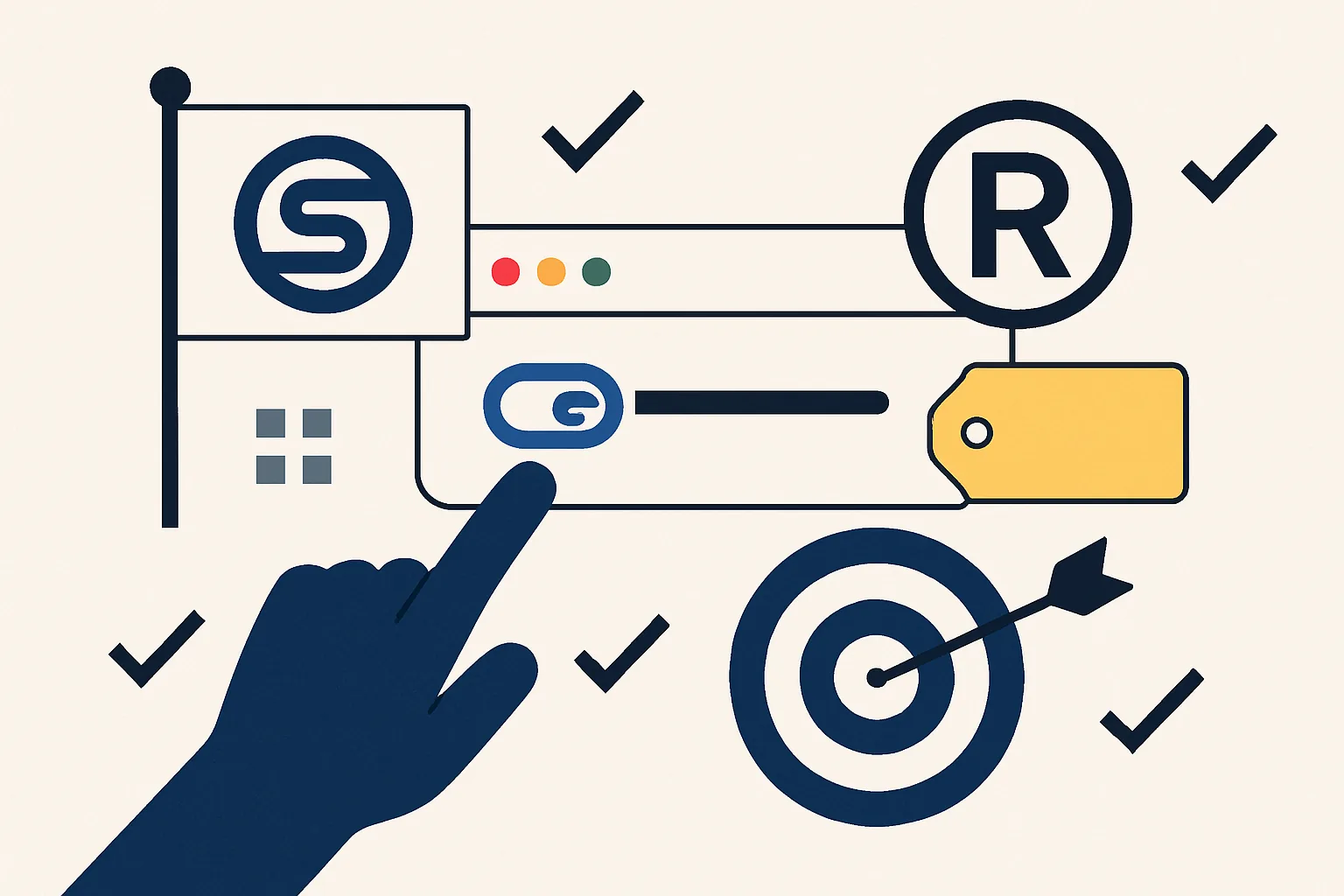
Campaign links do more work than most teams give them credit for. They sit in social posts, emails, ads, SMS messages, QR codes, and influencer captions, quietly carrying the first impression of a brand before anyone lands on the page itself. A branded short link takes that tiny moment seriously. Instead of a generic string of characters, it uses a recognizable domain and a clean path that looks intentional, trustworthy, and easy to share.
That difference may seem small on paper. In practice, it changes how people react to the link. A branded URL is easier to read, easier to remember, and less likely to trigger the mild hesitation people feel when they see a random short domain they do not recognize. For campaigns, that hesitation matters. A link that feels familiar is a link that gets clicked, copied, and reposted with less friction.
What branded short links are and why campaigns use them
A branded short link is a shortened URL that uses a custom domain associated with a brand, product line, event, or publication. Instead of sending someone through a generic shortener, the link carries the brand name or a close variation of it. For example, a campaign link might use a company-owned domain with a concise path that points to a landing page, product page, or registration form.
The practical difference between branded and generic short URLs is not only appearance. Generic links are functional, but they are also anonymous. A branded link immediately answers a few silent questions: Who is behind this? Is it part of the campaign I expect? Can I trust it enough to click?
Campaign teams use branded short links for three main reasons:
- Trust: the link looks owned and intentional rather than random or disposable.
- Recognition: the brand stays visible even when the full destination URL is hidden.
- Cleaner sharing: links fit better into posts, emails, text messages, and printed materials.
That last point sounds cosmetic, but it is not. A tidy link can improve how a message reads. It reduces visual noise, especially in places where the surrounding copy is already doing enough work. Nobody wants a banner ad or a tweet to look like a pile of tracking parameters and punctuation.
How branded links improve click-through and user trust
Branded links tend to perform well because they lower the small, everyday barriers that stop people from clicking. On social media, where attention is thin and skepticism is thick, a recognizable domain can make a post feel much more legitimate. In email, a branded link helps a message look like it belongs to the sender rather than a forwarded chain or a sketchy promotion. In SMS, where every character earns its keep, the clarity matters even more.
There is also a psychological effect at play. People are more comfortable clicking something they can identify at a glance. They do not need to decode a strange domain or wonder whether the link will lead somewhere unrelated. That matters in influencer content too, where audiences are already deciding whether the recommendation feels authentic. A branded link can support that authenticity without drawing attention to itself.
In ads, especially paid social, the link itself is part of the creative. A branded URL can reinforce the message and help the ad feel polished rather than stitched together. In emails, it can reduce link hesitation, particularly when the call to action is repeated in the body and button. In text messages, a clean link is often the difference between a tap and a pass.
For teams that care about trust and audience safety, it is worth pairing branded links with broader link hygiene. If people are cautious about unknown destinations, they are not being difficult; they are being sensible. A helpful companion read on that topic is Are Short Links Safe? How to Check Before You Click.
Choosing a custom short link domain
Choosing a custom short link domain is part branding exercise, part technical decision. The best domain is short enough to be practical, close enough to the main brand to feel recognizable, and flexible enough to survive beyond one campaign. You are not just naming a link. You are setting a foundation for future sharing.
Start with consistency. If your public brand is known by one name, the short link domain should usually echo that name rather than invent a clever variation. Clarity beats creativity here. A clean brand-aligned domain is easier for users to trust and easier for internal teams to remember.
Some naming tips help avoid future regret:
- Keep the domain short and readable.
- Avoid obscure abbreviations unless they are already part of the brand.
- Prefer simple spelling over clever wordplay.
- Choose something that can work across many campaigns, not just one launch.
Technical setup usually starts with registering the domain and pointing it to your link platform or redirect infrastructure through DNS. That may involve CNAME records, A records, SSL/TLS configuration, and setup steps in the tool you use. The details vary by provider, but the principle is the same: the custom domain needs to resolve reliably and securely.
A common pitfall is choosing a domain that is too narrow. A seasonal promo domain may work for one burst of traffic and then feel awkward the next time the marketing team wants to reuse the same system. Another mistake is making the domain so similar to another brand asset that staff members themselves can barely tell it apart. If your team has to check it twice, users will too.
For brands that want to make domain selection part of a broader identity system, it can help to think beyond the link itself. A custom short link domain is one piece of a more recognizable digital presence. If that is a priority, custom short link domain goes deeper into the branding angle.
Using branded short links across campaign channels
The strongest branded link strategies are not channel-specific. They work because the same naming logic follows the campaign everywhere it appears. That does not mean every link must be identical. It means the structure should feel coherent, so people moving from an email to a QR code to a social post recognize they are still in the same campaign.
In paid ads, branded short links can keep the call to action neat while making it easier to read at a glance. In social media, they reduce clutter in captions and bios. In email campaigns, they help preserve a clean layout, especially when you are repeating the same destination in text and buttons. For SMS, the value is obvious: short, clear, and branded usually wins.
QR codes are another strong use case. When the code appears on posters, flyers, packaging, or event signage, the visible URL often matters as much as the code itself. A branded short link beneath the code reassures people who prefer to know where they are headed before scanning. If your campaign includes printable materials, that flexibility can save a lot of reprinting later. It also pairs well with Dynamic QR Codes: Change the Destination After Printing, which is especially useful when offline materials need to stay current.
At events, branded links can appear on slides, name badges, stand displays, and follow-up emails. In influencer content, they can be used in bios, story links, or trackable promo URLs without breaking the creator’s tone. The trick is not to overdesign the system. Use the same logic for naming campaigns across channels, and people will navigate them more easily.
One simple discipline helps: create a campaign naming convention and stick to it. If your social team uses one pattern, your events team another, and your email team a third, the analytics later will feel like a drawer full of mismatched cables. Consistency saves time, especially when a campaign is live and decisions need to happen quickly.
Best practices for creating memorable campaign links
A good campaign link should be brief, descriptive, and easy to say out loud. That last part is often overlooked. If a team member can read the link in a meeting without stumbling, it is probably on the right track. If it sounds like a password, it is not.
Start with a simple structure: brand domain, campaign path, and optional short tag. For example, a path might reflect the product, event, or offer without trying to explain the entire campaign. Keep vanity slugs human-friendly. Words like launch, spring, summit, trial, or webinar are immediately understandable. Long chains of letters and numbers are not.
Campaign tagging is useful, but it should not turn the link into a storage room for metadata. If you need tracking parameters, keep them separate from the visible short link when possible. The visible part should stay clean and memorable. The hidden layer can do the analytical work.
Avoid overly promotional slugs that read like ad copy. Something like “bestdealnow” may feel efficient internally, but it can look noisy or even suspicious to users. A neutral, descriptive slug usually ages better. It also travels better when the campaign gets republished or referenced elsewhere.
There is a subtle editorial principle here: a link should imply the destination without overselling it. Good copy does not scream. Good links do not either.
Tracking, attribution, and optimization
Branded short links are valuable partly because they can support better measurement. They make it easier to distinguish one campaign from another, one channel from another, and sometimes even one creative version from another. That matters when a team wants to learn which messages are earning attention and which are getting ignored.
Tracking often begins with unique links for each channel or placement. A social post gets one link, an email newsletter gets another, and an ad variant gets its own version. That lets the team compare performance without guessing which source actually drove the click. For A/B testing, the structure is especially useful because changes in the visible link path can help separate tests cleanly.
Depending on the tool, branded link platforms may provide click analytics, referrers, geolocation, device breakdowns, conversion integrations, or team reporting. The exact reporting features depend on the system in use, so it is worth checking what is native and what requires integrations. Some teams need lightweight click counts. Others want a fuller attribution workflow. There is no single right answer.
Optimization usually comes from patterns, not one-off events. Maybe one type of link performs better in SMS because it is shorter and more direct. Maybe a specific vanity slug gets more attention in social because it feels like part of the content, not an interruption. The point of tracking is not to admire dashboards. It is to make the next campaign a little sharper than the last.
Common mistakes to avoid with branded links
One of the easiest mistakes is inconsistency. If a campaign uses several domains, several slug styles, and several naming conventions, both users and internal teams lose the thread. The brand starts to feel fragmented. That is a shame, because the whole point of a branded link is to do the opposite.
Broken redirects are another problem. A beautiful short link that leads nowhere helps nobody. Before launch, test every destination, every fallback, and every critical redirect path. If a link is going to be printed, scheduled, or embedded in a paid placement, it should be checked with extra care.
Irrelevant slugs can also undermine trust. If the campaign name says one thing but the link path suggests something else, users may hesitate. Even worse, they may click and feel misled. That is not a technical failure so much as a messaging failure.
Brand safety matters too. A branded link should lead somewhere consistent with the promise made in the surrounding copy. If the ad looks premium and the destination looks unfinished, people notice. If the domain is branded but the page feels off-topic, the credibility gained by the link may disappear just as quickly.
There is also a maintenance issue. Campaign links often live longer than the people who created them expect. Old slugs, expired destinations, and abandoned landing pages can linger in shared documents and archived posts. That makes it worth planning how links will be updated, redirected, or retired over time.
How to choose a branded link setup for your team
The right branded link setup depends on who will use it, how often they will use it, and what they need from the system after launch. A small team may care most about simplicity: create links quickly, keep the naming clean, and avoid complicated workflows. A larger organization may need roles, permissions, analytics, or integrations that support multiple departments without chaos.
Ease of use should be near the top of the list. If creating a branded link is cumbersome, people will stop doing it consistently and revert to whatever is fastest. Scalability matters too. A setup that works for one campaign might fail when the marketing calendar gets busier and multiple teams need access at once.
Analytics needs should guide the decision, but they should not dominate it. More data is only useful if your team can act on it. It is better to have a modest reporting setup that people actually use than a complex one nobody opens after the first week.
Ownership is the final piece, and it is easy to overlook. Make sure the custom short link domain is controlled by the organization, not by a freelancer, agency account, or temporary project owner. That detail becomes important when accounts change, vendors rotate, or the campaign grows beyond its original scope.
If privacy or controlled sharing is part of your workflow, it may also be worth looking at features beyond branding alone. For example, Password-Protected Links: Share Privately, No Account can be relevant for internal campaigns, partner previews, or gated materials.
Closing thoughts
Branded short links are a small piece of campaign infrastructure that can make a disproportionate difference. They help people trust what they see, recognize the brand behind it, and move through the campaign with less friction. They also give teams a cleaner way to organize tracking, testing, and cross-channel sharing.
The best setups are not flashy. They are readable, consistent, and boring in the right ways. They make the right impression quickly, then get out of the way. In campaign work, that is often exactly what you want.
Put this into practice
Paste a link and get a short URL, a QR code and click stats in seconds — free, no sign-up.
More from the blog

What a Short Link Analytics Dashboard Is
Learn short link analytics dashboard metrics, from clicks and referrers to device and timing data, to judge campaign performance better.
Link Shortener with Custom Alias
Learn how a link shortener with custom alias creates branded, readable URLs that improve trust, sharing, and campaign clarity.
What a Custom Short Link Domain Is and Why Businesses Use It
Learn how a custom short link domain for business boosts branded short links, link trust, and campaign clarity across channels.