
On this page
What a Custom Short Link Domain Is
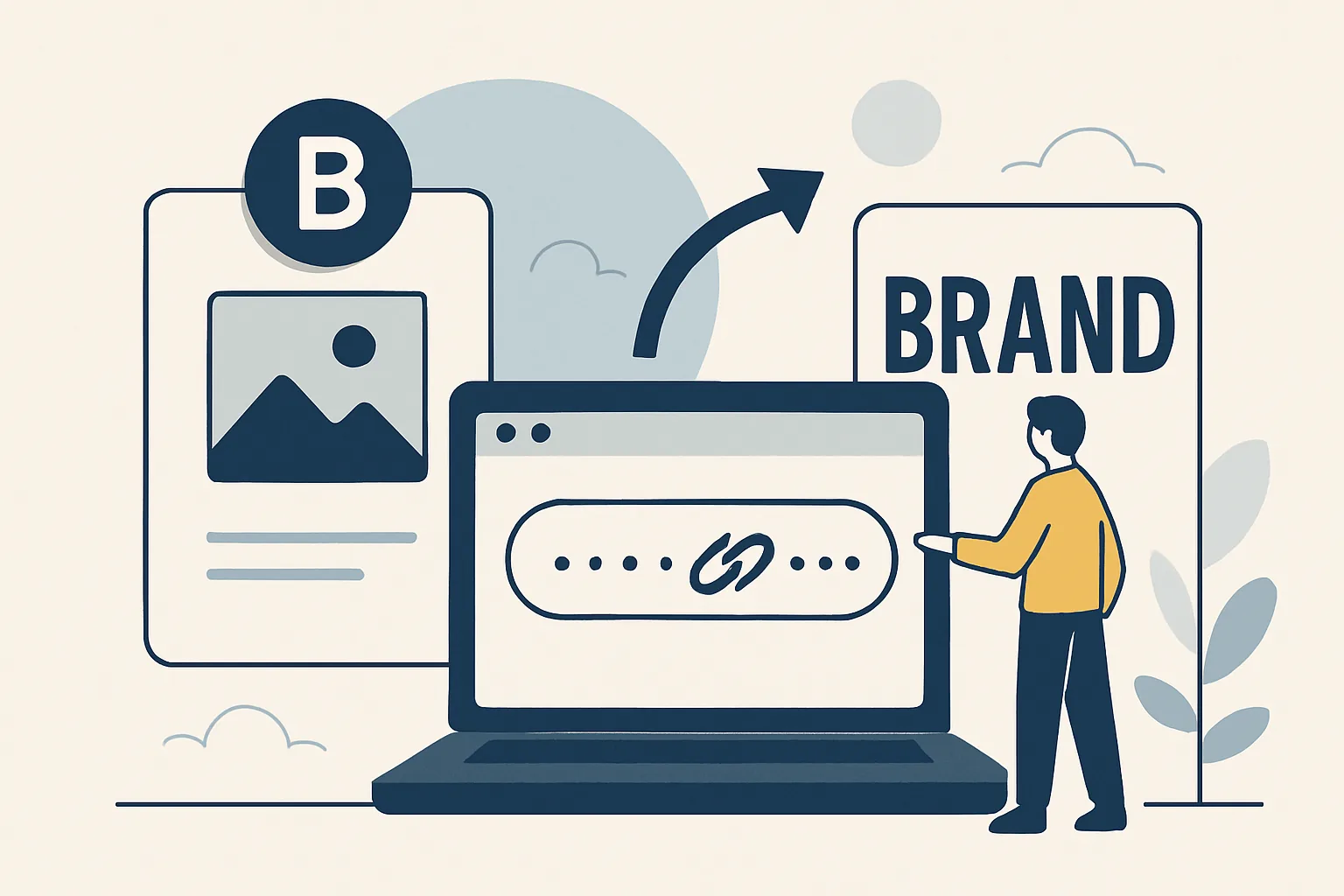
A custom short link domain is exactly what it sounds like: a brand-owned domain used to create short links instead of relying on a generic shortening service. Rather than sharing a link that looks like it came from a third party, you send people a URL that carries your name, your campaign, or at least your brand’s own web address. It is a small detail, but a meaningful one.
There’s an important distinction here. A standard short URL service may give you a compact link, but the domain itself belongs to the platform, not to your business, and a branded short link, by contrast, uses a domain you control. That can be your main domain, a subdomain, or a separate domain registered specifically for link sharing. The result is a link that feels more deliberate and more trustworthy from the first glance.
For example, instead of a generic shortener, a business might use something like brand.link or go.brandname.com. The exact format matters less than the principle: the link should look like it belongs to the company sending it, and that simple shift can change how a recipient perceives the message before they even click.
Why Brands Use Branded Short Links
Businesses adopt branded short links for a mix of practical and reputational reasons. The first is recognition. When people see a familiar brand in the link, they do not have to wonder where the click will take them. That matters in crowded inboxes, busy social feeds, and fast-moving campaign environments where every second of attention counts.
Trust is the next obvious gain. People have learned to be cautious with shortened URLs, especially when the destination is hidden. A branded short link reduces that uncertainty. It does not remove the need for caution entirely, of course, but it gives the audience a clear cue that the link is connected to a known organization. If you want a deeper look at the safety angle, Are Short Links Safe? How to Check Before You Click is a useful companion read.
There is also the matter of consistency. Marketing teams spend a lot of time building a recognizable voice across email, social posts, print materials, event signage, and even customer support messages. A custom short link domain fits into that system neatly. It keeps the brand visible at every touchpoint, even when the content itself has to be short and functional.
And then there is the less glamorous but very real benefit of cleaner sharing, and long URLs can be awkward in captions, impossible on posters, and easy to mistype on a phone. A short, branded link solves those problems without making the message look clipped or improvised.
How a Custom Domain for Short Links Works
At a high level, the setup is straightforward, though the exact steps depend on the platform and the domain registrar you use. The usual process starts with choosing a domain or subdomain that will be dedicated to short links. Some brands use a separate short domain; others prefer a subdomain under the main site, such as go.example.com or links.example.com.
Next comes DNS configuration. In practice, this means pointing the chosen domain or subdomain to the short-link platform by updating the appropriate records at your DNS provider, and once that connection is in place, the platform can recognize the domain and use it to generate branded links.
After the domain is connected, the platform typically issues or enables SSL so links can be served securely over HTTPS. That step should not be treated as optional. Most users expect a secure connection, and browsers increasingly do too.
Once everything is verified, you can begin creating links. The system usually takes a destination URL and pairs it with a short branded path. So a long campaign page becomes a concise link that is easier to share and easier to remember. If your campaign includes visual materials, this is also the point where a related tool can come in handy; for instance, Dynamic QR Codes: Change the Destination After Printing shows how branded links and scannable codes can work together.
Key Benefits for Marketing and Communications
Branded short links are not just a cosmetic upgrade, and they support communication in channels where brevity and clarity are essential. Email marketers, for example, often need links that are easy to scan visually and unlikely to trigger hesitation. A custom short link domain helps a message feel cohesive from subject line to call to action.
On social media, the advantage is even more visible, and posts have limited space, and users move quickly. A clean branded link blends into the message instead of looking like an afterthought. It also avoids the visual clutter of a long tracking-heavy URL, which can make a post feel messy even when the content is strong.
Print and offline materials benefit in a different way. If a customer sees a short link on a flyer, a booth banner, or a product insert, they are more likely to type it correctly if it is short, readable, and clearly connected to the brand. That can matter at events, in retail environments, or in any situation where the digital and physical worlds meet.
QR codes, too, are easier to manage when the destination is behind a custom short link domain. The link can be updated in the platform while the printed code stays the same, which reduces waste and keeps campaigns flexible. If your team uses QR codes regularly, it is worth pairing this approach with the strategy explained in Dynamic QR Codes: Change the Destination After Printing.
There is a communications benefit that is easy to overlook: internal consistency. When support teams, partnerships teams, events teams, and marketing teams all use the same branded link format, the brand’s digital presence feels more organized, and that consistency can make a company look more established, even before anyone clicks.
Important Setup and Technical Considerations
Choosing a domain for short links is partly a branding decision and partly a technical one. The first question is how the domain will fit alongside your existing website. Some businesses use a subdomain of the main brand site because it is easy to recognize and keeps the brand family unified, and others prefer a dedicated domain for links so the main site remains separate from redirect traffic.
Either way, you want a domain that is easy to spell, easy to read aloud, and unlikely to be confused with another company’s name. This is not the place for cleverness that only makes sense after three explanations.
SSL is another key consideration. Because the links will be shared publicly, secure delivery should be part of the setup from the start. Browsers, email systems, and users themselves are less forgiving than they used to be when a site or link looks unprotected.
DNS propagation can also affect launch timing, and after records are updated, it may take some time before the new domain works consistently across the internet. For this reason, it is smart to set up branded short links well before a major campaign goes live, not the day before a launch email is scheduled.
Routing logic matters as well. The platform should redirect users quickly and reliably to the destination, whether that destination is a landing page, a product page, or an app store listing. If redirects are slow or inconsistent, the whole advantage of a branded link starts to erode.
There is also the practical issue of overlap with your main website or with other subdomains already in use, and it is worth checking whether your IT or web team already uses similar naming patterns before you commit. A short-link domain should be easy to manage, not another source of confusion.
Best Practices for Creating Branded Short Links
The best branded short links are the ones people can understand at a glance. That means keeping the brand portion clear and the slug portion simple. A short link does not need to explain the entire campaign. It only needs to be legible and dependable.
Use naming that matches the tone of your brand, and a fintech company may want something plain and professional. A creative brand may have a little more room for personality. The key is consistency. If your email links, social links, and print links all follow the same logic, users start to recognize the pattern.
Keep slugs short whenever possible. Long strings of campaign jargon do not help anyone. A compact slug is easier to share verbally, simpler to type, and less likely to be cut off in a message preview. If a link must encode multiple variants for tracking, let the platform handle the complexity behind the scenes instead of pushing it into the visible URL.
It also helps to maintain a clear brand voice in the link structure, and some teams use a naming style that is descriptive and neutral; others build in campaign names or content categories. Either way, the system should feel intentional. A messy collection of random slugs makes the brand look disorganized, even when the content is strong.
Finally, use the same format across channels. A link used in a newsletter should not look completely different from one used in a poster or a partner kit unless there is a strong reason for the variation, and consistency makes the brand easier to recognize and the campaign easier to measure.
Common Mistakes to Avoid
One of the most common mistakes is choosing a domain that is hard to spell or easy to mishear. If someone has to ask whether the link ends in .com, .co, or something else entirely, you have already created friction, and brand clarity is the whole point, and confusing domains work against that goal.
Another problem is inconsistent branding. If some links use one domain, some use another, and some still rely on a generic shortener, the overall experience becomes fragmented. People notice that kind of inconsistency, even if they cannot always explain why the brand feels less polished.
Poor redirect management is another trap. Links change over time, campaigns end, pages move, and old destinations sometimes disappear, and if those redirects are not monitored, users can land on dead pages or irrelevant content. That is especially painful when the link is printed on physical materials that cannot be updated easily.
It is also a mistake to treat a short-link domain as “set and forget.” Domains expire, DNS settings drift, platform permissions change, and teams forget which links were used where. A basic review process helps prevent surprises.
One more issue: using links without checking destination quality, and a branded short link can look trustworthy, but if it leads to a weak landing page, the link is only doing half its job. The redirect should point to a page that is relevant, fast, and ready for the traffic it is about to receive.
Choosing the Right Platform for Your Brand
Not every short-link service is built for brand use. When evaluating a platform, start with the basics: can it support a custom domain, and how painless is the setup? If the answer involves too much manual work or too many technical workarounds, your team may spend more time maintaining links than using them.
Analytics are equally important. A branded link is useful on its own, but it becomes much more valuable when you can see how it performs across campaigns and channels. You may not need every available metric, but you should be able to understand which links are getting clicks, where traffic is coming from, and how different campaigns compare.
Scalability matters too. A small team might only need a few links a week, while a larger organization may generate links for multiple departments, partners, and regions. The platform should handle that growth without turning link management into a bottleneck.
Team access is another practical consideration, and marketing, design, communications, and support may all need to create or review links. Look for permission controls, shared workspaces, or whatever collaboration tools the platform offers so the system does not rely on one person guarding the keys.
Finally, think about what happens after setup. A good platform should make it easy to keep links organized, update destinations when needed, and work with related tools such as custom domains, QR codes, and campaign analytics. If you are building a more complete branded link strategy, it can also help to explore adjacent features like custom short link domain and Retargeting Pixels on Short Links: Audiences From Clicks, especially if your team wants both cleaner links and better campaign follow-up.
At bottom, a custom short link domain is less about shortening for its own sake and more about control. Control over presentation, trust, tracking, and how your brand appears in the small moments that surround a click. Those moments add up. A well-chosen branded link does not shout, but it does its job quietly and well.
Put this into practice
Paste a link and get a short URL, a QR code and click stats in seconds — free, no sign-up.
More from the blog
What a Custom Short Link Domain Is and Why Businesses Use It
Learn how a custom short link domain for business boosts branded short links, link trust, and campaign clarity across channels.
Custom Short Link Domain: Brand and Redirect Basics
Learn how a custom short link domain builds trust, improves tracking, and powers a clean custom short link domain redirect setup.
How to migrate from QR code stickers to dynamic QR codes
Learn how to migrate from QR code stickers to dynamic QR codes by auditing stickers, prioritizing replacements, and rolling out managed links.