
On this page
What Branded Short Links Are and Why They Matter
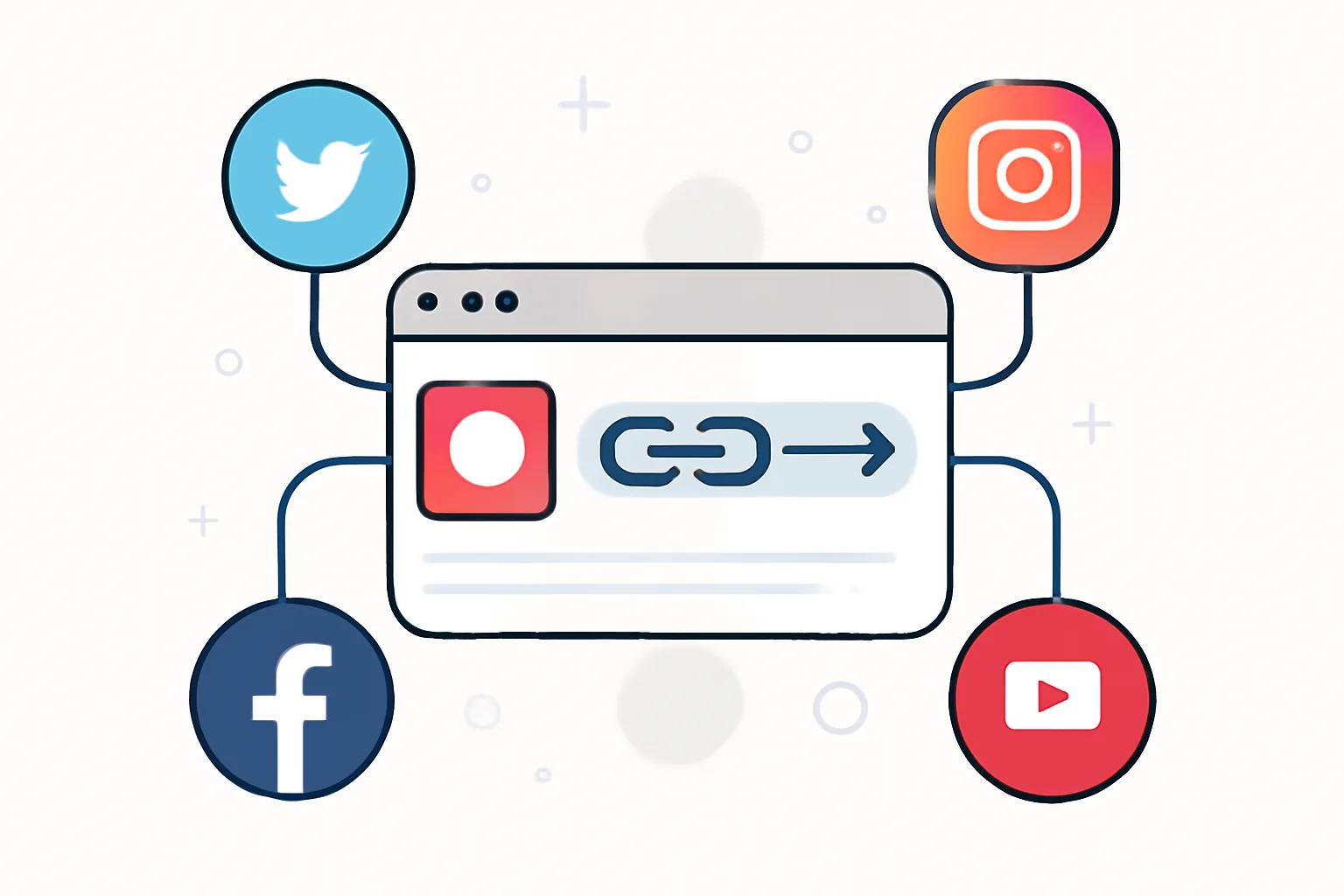
Branded short links are shortened URLs that use your own domain instead of a generic one. Instead of sending people to a long, plain address or a random-looking short link, you can share something that looks more intentional and recognizable. A link such as yourbrand.link is easier to trust at a glance than a generic shortened URL with no clear connection to the business behind it.
That small difference matters more on social media than many teams expect. People scan quickly. They tap fast. They decide in a split second whether a post, profile, or message feels legitimate. A branded short link helps the destination feel expected rather than suspicious, and that can improve the odds that someone clicks instead of hesitating.
There is also a practical side to it. Branded short links can make campaigns look consistent across posts, ads, bios, and direct messages, and they can reduce visual clutter in captions and comments. And, because they are still links, they can do the same job as any other short URL: sending someone to a product page, signup form, article, or event page without exposing the full destination.
For social teams, that balance of clarity and control is the real appeal, and the link is shorter, yes, but it is also a small piece of brand presentation. A well-chosen branded link can reinforce recognition every time it appears.
How Branded Short Links Work
The mechanics are straightforward. A shortening platform receives a long destination URL, creates a short alias, and maps that alias to the final page, and when someone clicks the short link, the service redirects them to the destination in a fraction of a second. In most cases, the user sees the branded domain first, then is taken onward without needing to know the long URL behind it.
With a custom short link domain, the shortening platform is attached to a domain you control. That means the public-facing link carries your brand or a variation of it. The system still performs the same redirect function, but the address in the browser or app looks cleaner and more familiar.
Many tools also add tracking at the redirect layer, and that can include click counts, device type, approximate location, referring source, and time of click, and for social media teams, that turns a simple link into a measurement point. One campaign can be compared with another. One platform can be compared with another. And one creative can be compared with another without rebuilding the whole campaign structure.
The redirect is doing more than hiding a destination. It is also letting you manage the link after it has been published. In some tools, you can update where the short link points, which is useful when a campaign changes or a page moves, and for social content that lives longer than expected, that flexibility can save a lot of cleanup later.
Choosing a Custom Short Link Domain
Picking a custom short link domain is part branding exercise, part technical decision, and the best choice is usually short, easy to spell, and obviously connected to the business. You want something that looks natural in a caption and can be read out loud without confusion.
A few naming principles help. First, keep it simple. Short domains are easier to remember and less likely to be mistyped, and second, stay consistent with your brand identity. If your main brand name is unavailable, consider a clean variation rather than a clever string of abbreviations that nobody can decode. Third, think about how the domain will look next to your social content. A domain that works on a website may feel too long or awkward in an Instagram bio.
DNS setup is the technical piece that ties the domain to your shortening platform, and in plain terms, your domain registrar needs to know where to send requests for the short-link service, and depending on the setup, that may involve CNAME records, A records, or other configuration details. If that sounds unglamorous, it is. But good configuration is what keeps links resolving quickly and reliably.
There are also a few mistakes to avoid. Choosing a domain that is too similar to a competitor can create confusion. Using a domain with odd punctuation or hard-to-type characters makes sharing harder. And changing the domain too often can fracture trust, because old links may stop looking familiar to your audience. If your team is planning a branded rollout, it can help to read a business-focused setup guide before making the final decision.
One more point: own the domain if you can. Renting trust from a platform is convenient, but owning the domain gives you more control over continuity and branding, and that matters when social links are used across campaigns, team members, and partner promotions.
Branded Short Links for Social Media Campaigns
Social media is where branded short links often prove their worth fastest. Posts are compressed. Space is limited. And every line has to work harder than it would in an email or on a landing page, and a branded link fits neatly into that environment because it is concise without feeling generic.
For organic posting, the value is mostly presentation and consistency. A campaign post on LinkedIn, a product teaser on X, and a video caption on Instagram can all use the same branded structure while pointing to different destinations, and that keeps the campaign visually unified, even when the content varies by platform.
For paid campaigns, short links can help clean up ad copy and make it easier to test versions of creative. If a team is running several variations at once, each ad can use a distinct short link so clicks are easier to separate later. This is where UTM parameters become especially useful. You can attach campaign tags behind the short link and preserve detailed attribution without forcing the audience to stare at a long tracking string.
Influencer partnerships are another good fit. Creators often prefer a link that is easy to say in a video, type in a bio, or drop into a story sticker. A branded short link feels less awkward than a full affiliate-style URL, and it can be paired with campaign-specific tracking for each partner. If your team is already thinking in terms of clean promotional links, affiliate link cloaking may be relevant too, especially when you want clarity without making the source of the link look messy.
Finally, branded links are useful across channels because they simplify link management, and the same destination might appear in a newsletter, a reel, a paid ad, and a pinned post, and a central short-link system helps keep those touchpoints organized, which matters more the larger the campaign becomes.
Link Shortener for Instagram: Best Practices
Instagram is one of the clearest use cases for a link shortener for Instagram because the platform gives you very little room to work with. Bio space is limited. Story links need to be obvious and tappable. Captions are not ideal for long URLs. That makes a short, branded link especially useful.
In the bio, the link should be memorable and fit the page’s purpose. If your account is promoting a product launch, the bio link should probably point to the launch hub rather than to a generic homepage. If you are running multiple campaigns, consider updating the destination as your priorities change. The link itself can stay stable while the final page shifts behind it.
For stories, the challenge is clarity. The link should be easy to recognize and easy to trust, and a branded domain helps here because users are already moving quickly through content, and they do not want to parse a strange URL before deciding whether to tap. Keep the CTA simple, too. “Tap to shop” or “See the full guide” works better than a vague prompt that forces people to think.
Profile optimization matters as well. If the account name, profile image, and link domain all align, the whole profile feels more coherent. That coherence matters on Instagram, where people often decide whether to follow or click based on a few seconds of scanning. A branded link should feel like a natural extension of the account, not a disconnected add-on.
There is also a mechanical benefit: shorter URLs are easier to paste, share, and remember when someone wants to revisit them later, and in practice, that means fewer lost clicks from people who meant to come back but did not bookmark the page, and if your team uses social content as a steady traffic source, that simplicity adds up.
Measuring Performance and Tracking Clicks
Once a branded short link is published, the real work begins: watching how people interact with it. Basic click counts show whether the link is getting attention at all. From there, referral source data can reveal which post, platform, or partner sent the traffic. Some tools also break out device type, geography, and time patterns, which can be useful when a campaign needs to reach people in specific contexts.
That said, not every platform reports the same way, and some social networks restrict parts of the referral path, and a click may be visible in your short-link dashboard even when the originating app gives limited detail, and this is normal, and it is one reason teams should compare data from more than one source before making conclusions.
UTM tracking remains important. A branded short link can make the public-facing URL clean, but the destination can still carry campaign parameters for analytics tools. That lets you connect social activity to broader reporting in a way that is more precise than link clicks alone.
For practical use, it helps to decide what success looks like before the campaign starts. Are you trying to grow clicks, signups, purchases, or video views? The answer changes which numbers matter most, and a link that gets fewer clicks but better conversions may be more valuable than one with a larger raw count, and social analytics can be noisy; the more clearly you define the goal, the easier it is to interpret the data.
If your workflow includes privacy-sensitive sharing or internal previews, some teams also combine branded links with access controls. In those cases, it can be worth looking at password-protected links for private campaigns or limited-access assets.
Common Problems and How to Avoid Them
Branded short links are simple on the surface, but a few problems come up often enough to deserve attention. Broken redirects are the most obvious. A link that once worked but now leads nowhere can damage trust quickly. This usually happens because of a misconfigured destination, an expired page, or a domain setup issue. Regular checks, especially after campaign edits, help prevent that.
Blocked domains are another concern. Some apps, email filters, and social platforms are cautious with shortened links, especially if a domain has been associated with spammy behavior elsewhere, and a branded domain can help reduce suspicion, but it is not a guarantee, and reputation still matters, and so does consistency in how the domain is used.
Spam concerns are tied closely to trust. If a link looks inconsistent with the surrounding content, people hesitate. If a team swaps domains frequently or uses a different link style in every post, the audience may stop recognizing the pattern. That is not just a branding issue; it affects click behavior too.
There is also the question of platform handling. Some social networks or apps may treat short links differently, whether because of preview generation, app security checks, or their own internal heuristics, and in practice, that means the same link may behave slightly differently from one channel to another. Testing before launch is wise, especially for large campaigns.
One useful habit is to keep a small checklist: test the destination, confirm the preview, verify the tracking, and open the link on mobile. The extra minute is worth it. Nothing sours a social campaign faster than a link that looks fine in draft and breaks after publication.
Choosing the Right Tool for Your Team
The best short-link platform for a team is not always the one with the longest feature list. It is the one that fits how the team actually works. Start with the basics: branded domains, reliable redirects, and clean analytics, and if those are weak, the rest does not matter much.
Then look at customization. Can the team create readable slugs? Can they organize links by campaign? Can they edit destinations later without rebuilding everything? These details become valuable quickly once multiple people are creating links across multiple channels.
Team access is another important piece. A social manager, designer, and account lead may all need different permissions, and a good tool should make it possible to collaborate without sharing one universal login. That is a security issue as much as a convenience issue.
Security features deserve attention too. Domains should be protected from misuse. Links should be manageable if a mistake is made, and and the platform should make it easy to review activity, especially when several campaigns are live at once. If your team is evaluating broader link safety concerns, this guide to checking short links is a useful companion read.
Finally, think about how the tool scales. A solo creator may need simple branding and click stats. A marketing team may need workflows, reporting, and multiple branded domains. A larger organization may also want deeper platform integrations and documentation, and in other words, choose for the next six months, not just for the next post.
Branded short links are not a flashy part of social media marketing, but they are one of the details that quietly improve the whole experience, and they make links easier to trust, easier to manage, and easier to measure. On crowded platforms, that is a meaningful edge.
Put this into practice
Paste a link and get a short URL, a QR code and click stats in seconds — free, no sign-up.
More from the blog

Why are my short link clicks not showing up in analytics after I share on social media?
Learn why are my short link clicks not showing up in analytics after I share on social media, from app browsers to stripped tracking parameters.
How to Use Short Links in Social Media Bios Without Losing Conversions
Learn how to use short links in social media bios without losing conversions by matching goals, copy, and destinations.
Can I use Urlik links in Instagram bio?
Learn can I use Urlik links in Instagram bio, how Instagram treats branded short links, and how to add them safely.